
ASL and Sodium MRI
Arterial spin labelling and sodium (23Na) MRI methods, including 7T research applications.
-
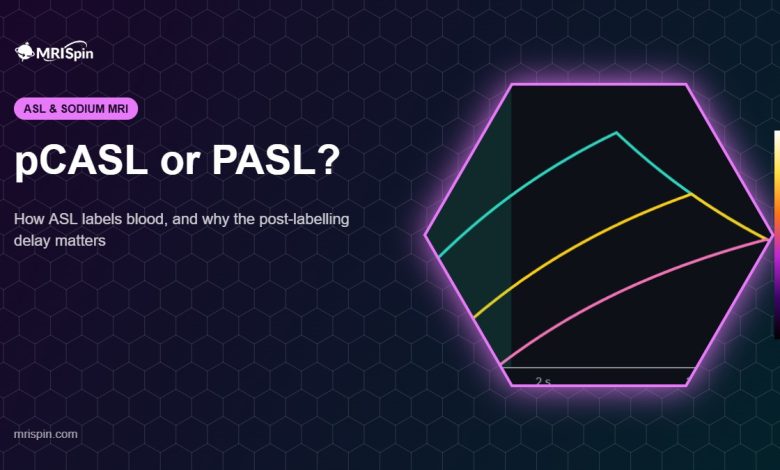
pCASL vs PASL: how arterial spin labelling labels blood
Pseudo-continuous versus pulsed arterial spin labelling, the 2015 consensus default timings, why post-labelling delay matters, and the CBF equation.
Read More » -
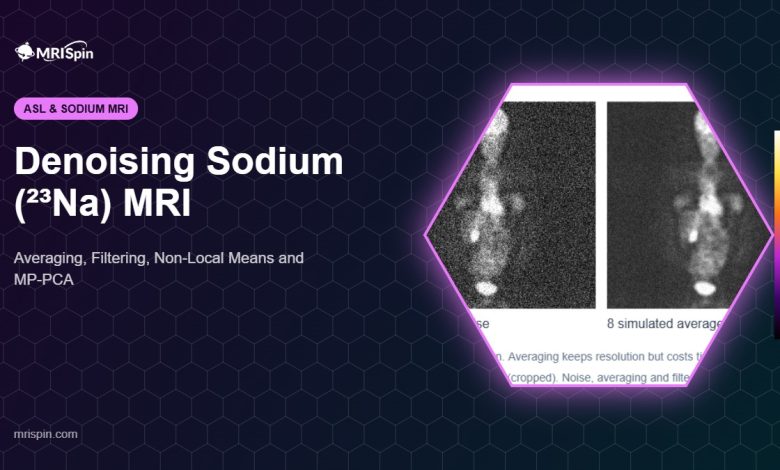
Denoising Sodium (²³Na) MRI: Averaging, Filtering, Non-Local Means and MP-PCA
A deep dive into improving low-SNR sodium MRI: noise statistics, averaging, k-space filtering, non-local means, BM4D, MP-PCA and regularised reconstruction, and how each affects quantification.
Read More » -
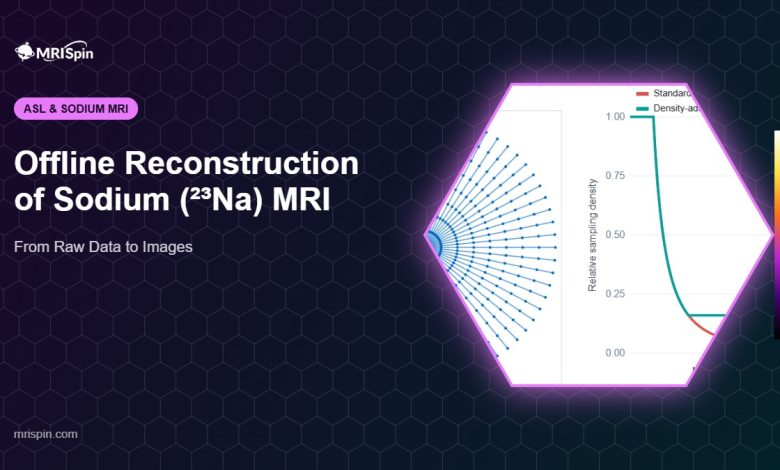
Offline Reconstruction of Sodium (²³Na) MRI: From Raw Data to Images
A practical deep dive into reconstructing non-Cartesian sodium MRI offline: exporting raw data, trajectories, density compensation, gridding and NUFFT, coil combination and iterative methods.
Read More » -
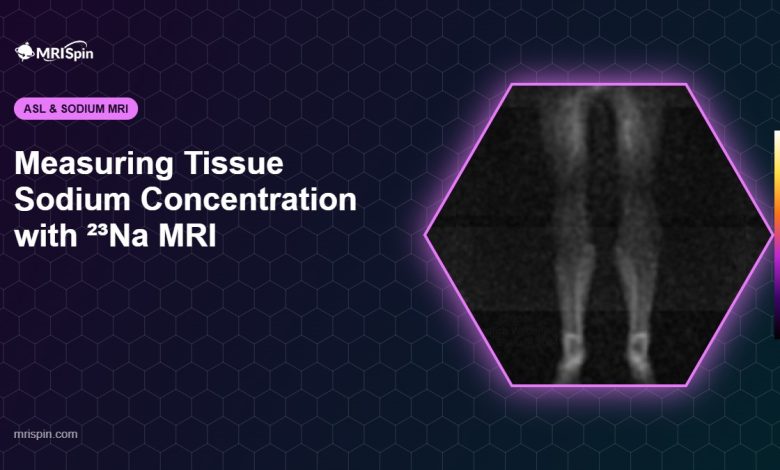
Measuring Tissue Sodium Concentration with ²³Na MRI
How sodium MRI turns signal into tissue sodium concentration (TSC) in mmol/L: very short echo times, reference phantoms, and the corrections that matter.
Read More » -
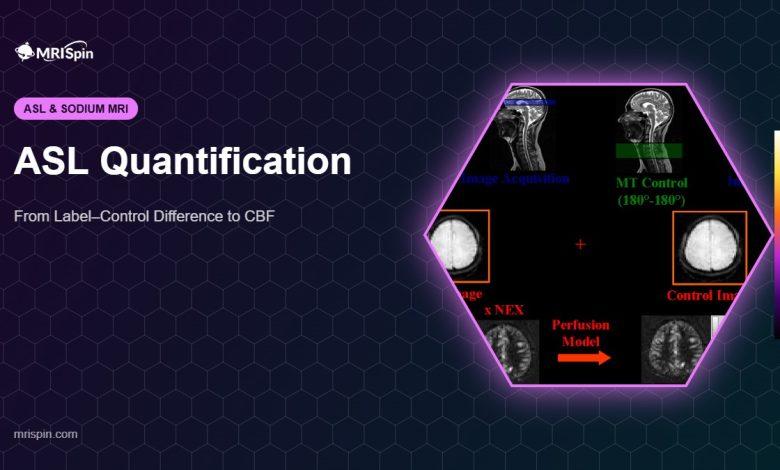
ASL Quantification: From Label–Control Difference to CBF
How a perfusion-weighted ASL difference image is converted into cerebral blood flow in mL/100 g/min, using the single-compartment model recommended in the ASL consensus paper, with a worked example.
Read More » -
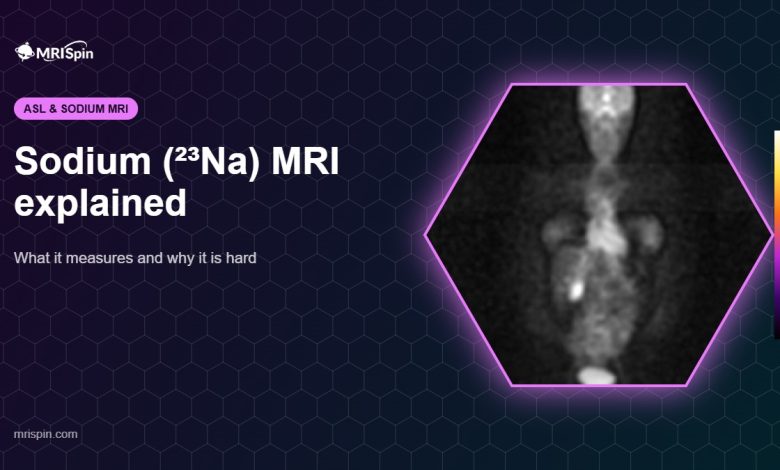
Sodium (²³Na) MRI explained: what it measures and why it is hard
Why sodium MRI is of interest, why its signal is weak and fast-decaying, and how ultra-short echo time methods and calibration give tissue sodium concentration.
Read More » -
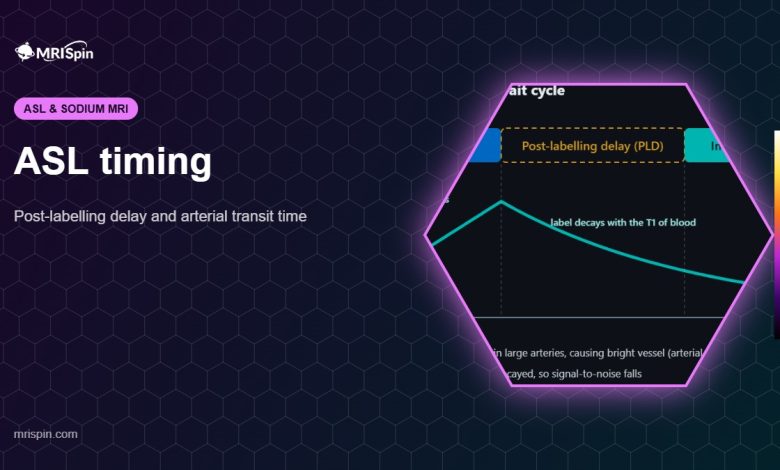
ASL timing: post-labelling delay and arterial transit time
How labelling duration, post-labelling delay and arterial transit time interact in ASL, and what happens when the delay is too short or too long.
Read More » -
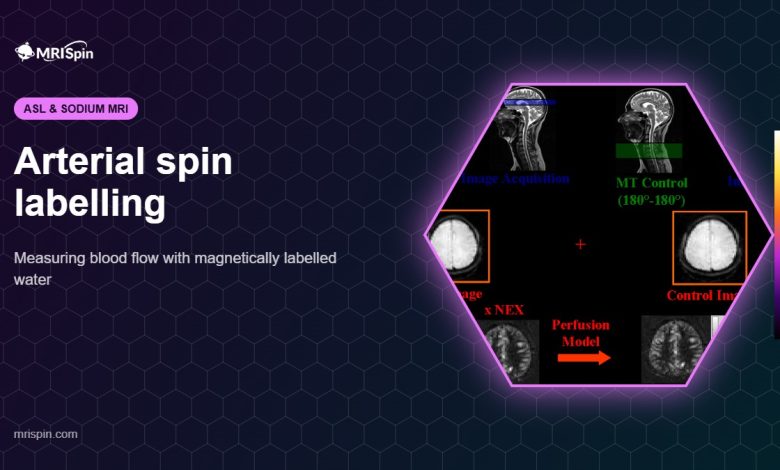
Arterial spin labelling in plain English
How ASL measures cerebral blood flow without contrast, what the post-labelling delay does, and why higher field strength is interesting.
Read More »