
MRI Physics
Core MRI physics explained clearly: contrast, sequences, artefacts and hardware.
-
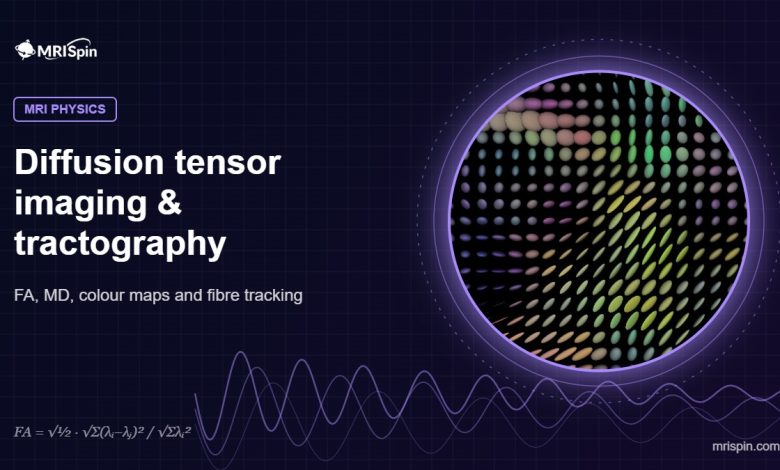
Diffusion tensor imaging (DTI) and tractography: FA, MD and fibre tracking explained
How DTI models water diffusion with a tensor, what FA, MD, AD and RD mean, how to read colour FA maps, and what tractography can and cannot show.
Read More » -
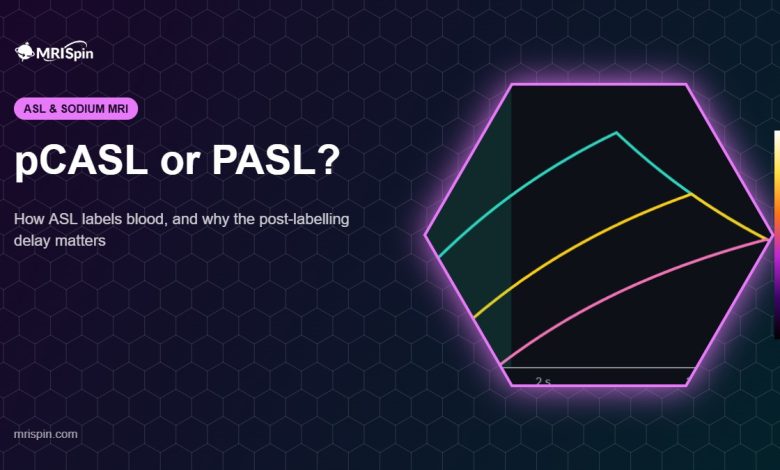
pCASL vs PASL: how arterial spin labelling labels blood
Pseudo-continuous versus pulsed arterial spin labelling, the 2015 consensus default timings, why post-labelling delay matters, and the CBF equation.
Read More » -
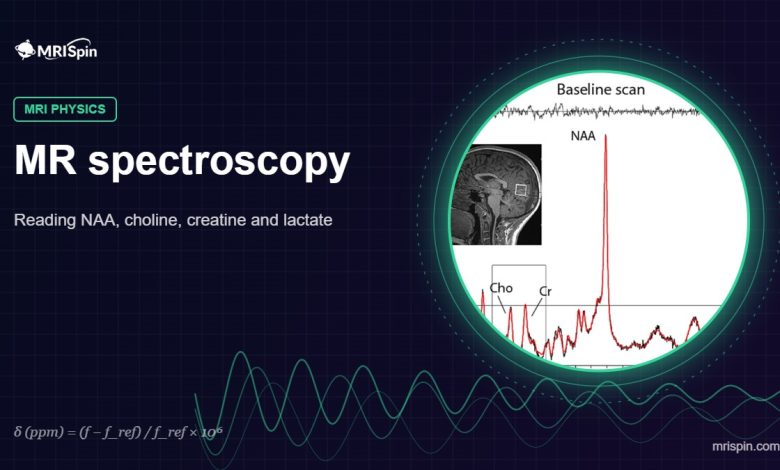
MR spectroscopy (MRS) explained: NAA, choline, creatine and lactate
What a proton MR spectrum shows, the main brain metabolite peaks, short versus intermediate echo times, and how to get a good spectrum.
Read More » -
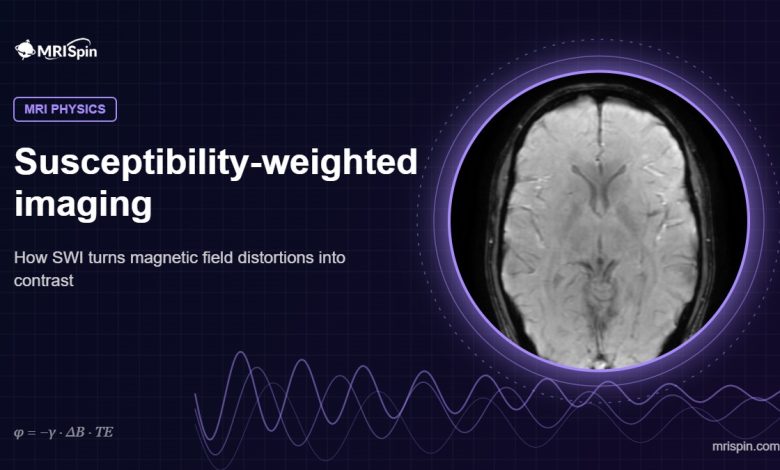
Susceptibility-weighted imaging (SWI): how it works and when to use it
How SWI combines magnitude and phase from a long-TE gradient echo, what it shows best, and the pitfalls of blooming and phase sign.
Read More » -
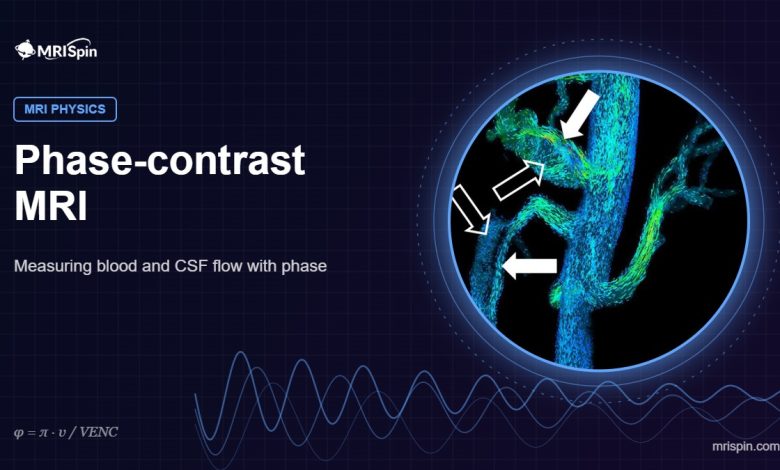
Phase-contrast MRI: measuring blood and CSF flow with VENC
How phase-contrast MRI turns phase into velocity, how to choose the VENC, what velocity aliasing looks like, and where PC MRI is used.
Read More » -
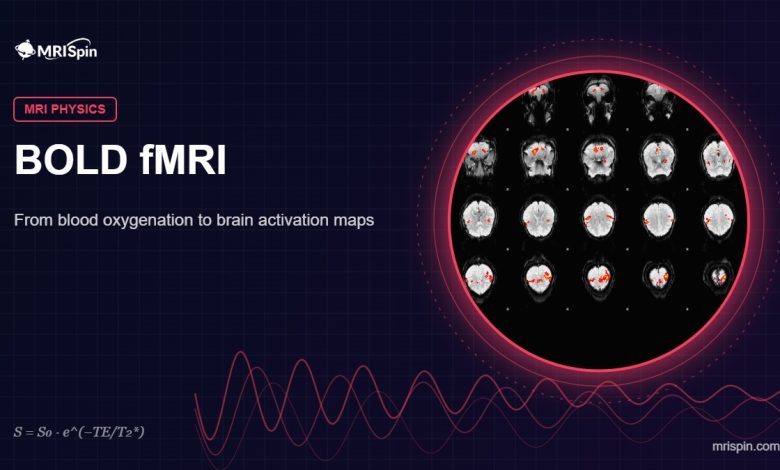
BOLD fMRI explained: from blood oxygenation to activation maps
Where the BOLD signal comes from, the haemodynamic response, EPI acquisition settings and the main artefacts in fMRI.
Read More » -
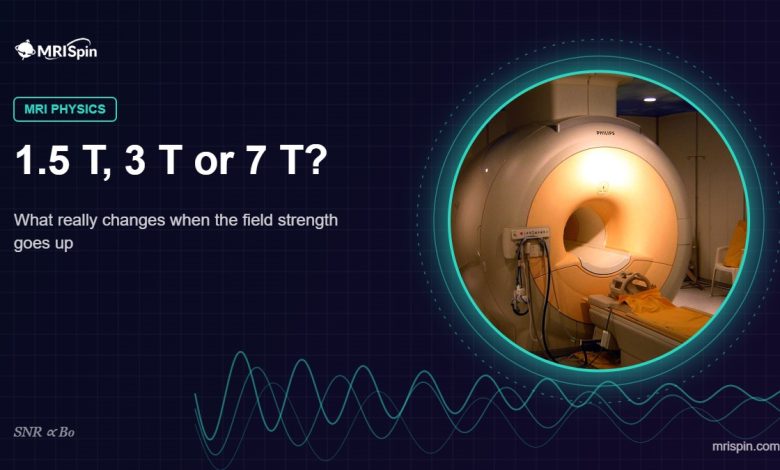
1.5 T vs 3 T vs 7 T MRI: what changes with field strength
What really changes between 1.5 T, 3 T and 7 T: SNR, T1, susceptibility, SAR, B1 inhomogeneity, artefacts and implant safety.
Read More » -
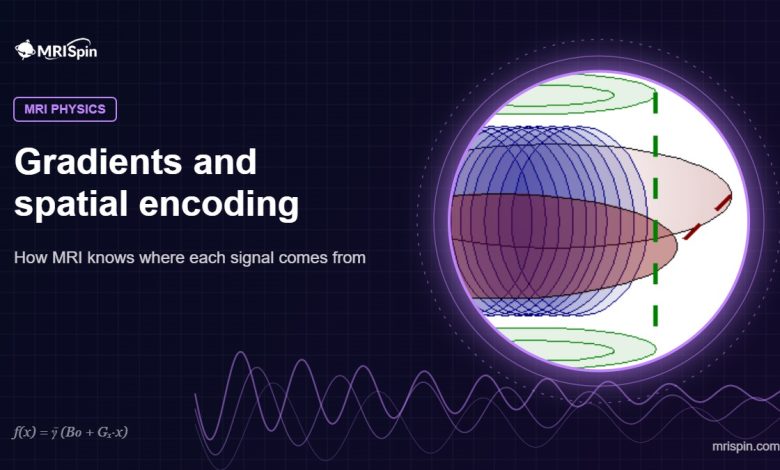
MRI gradients and spatial encoding: slice selection, frequency and phase
How gradient coils turn frequency into position: slice selection, frequency encoding and phase encoding, with worked numbers.
Read More » -
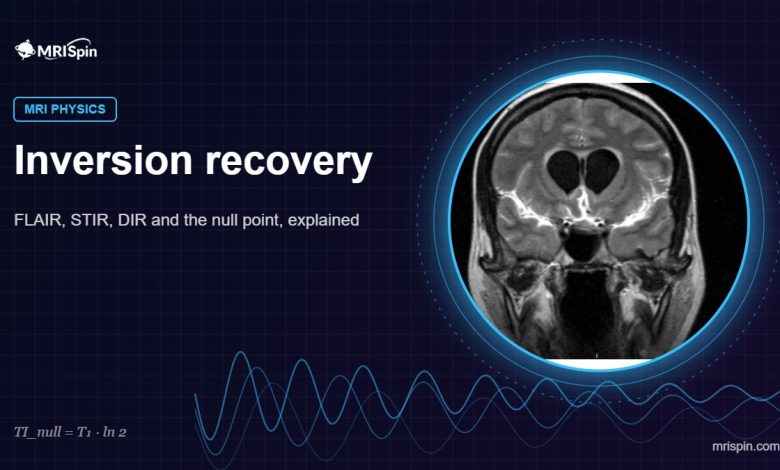
Inversion recovery in MRI: FLAIR, STIR, DIR and the null point
How inversion recovery works, how to calculate a tissue’s null point, and how FLAIR, STIR, DIR, PSIR and MPRAGE use it.
Read More » -
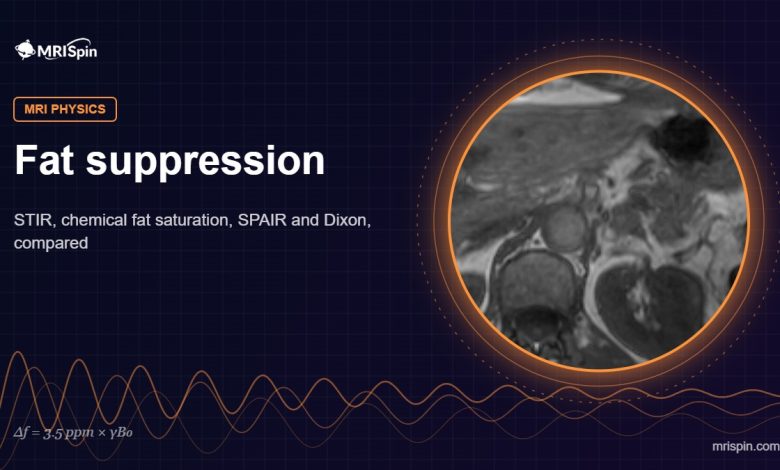
Fat suppression in MRI: STIR, fat saturation, SPAIR and Dixon compared
How MRI suppresses fat: chemical fat saturation, STIR, SPAIR and Dixon water–fat separation, with their strengths, pitfalls and when to use each.
Read More »