
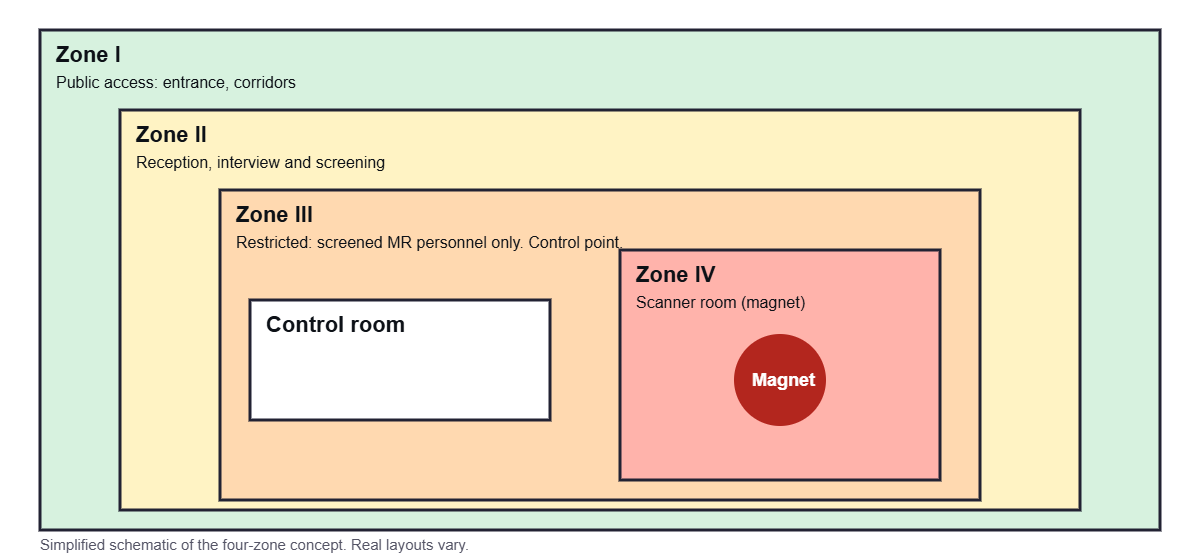
An MRI scanner’s magnet is always on. Unlike most imaging equipment, there is no switch to turn the field off between patients, so safety depends on controlling who and what can enter the room. The four-zone system, described in the American College of Radiology (ACR) guidance, organises the department so that access becomes more restricted the closer you get to the magnet.
Learning objectives
- Name the four MRI safety zones and what happens in each.
- Explain why Zone III is the key control point.
- Describe the main hazards: projectile effect, RF heating, acoustic noise and implant interactions.
- Understand the MR Safe, MR Conditional and MR Unsafe labels.
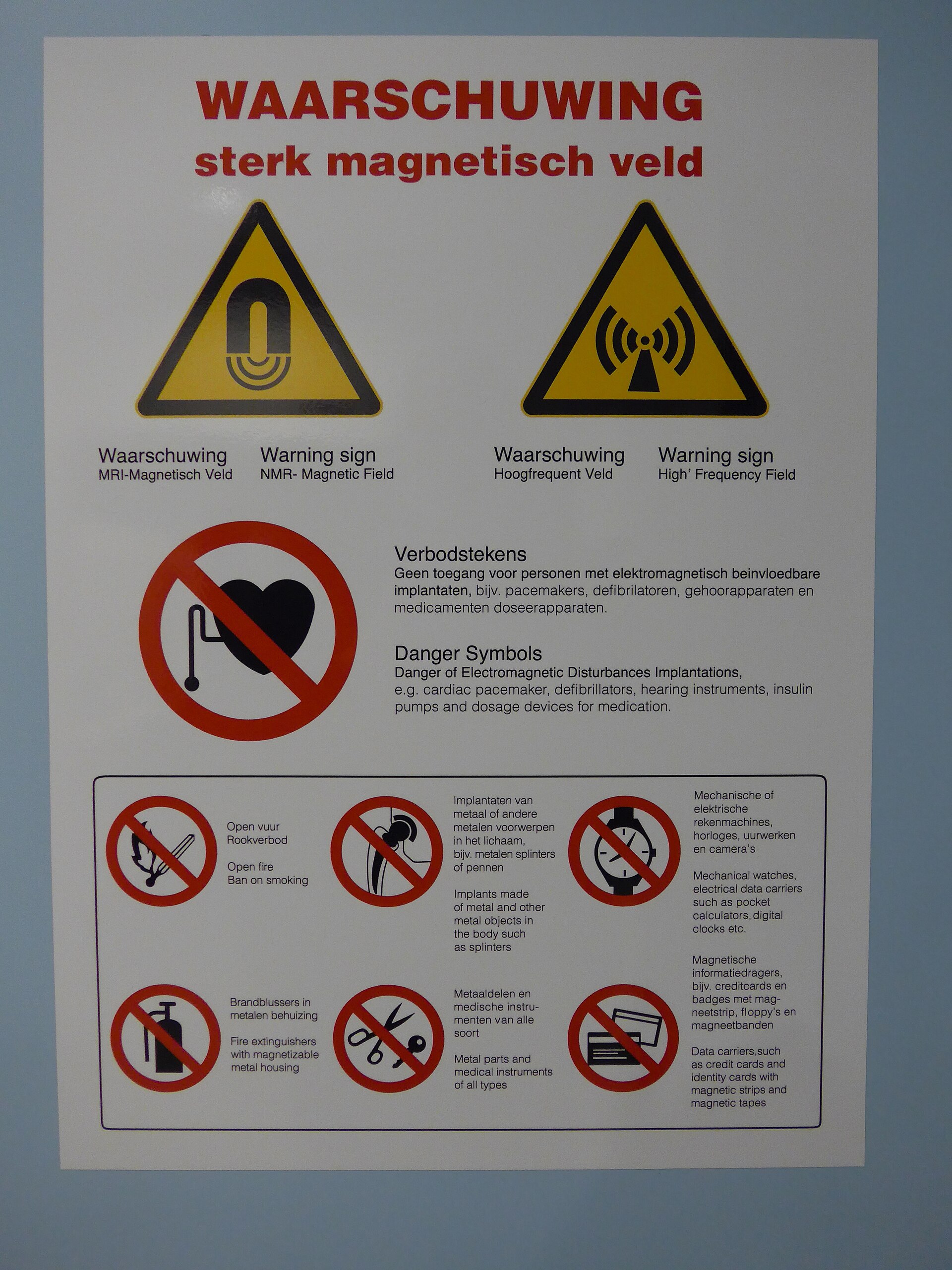
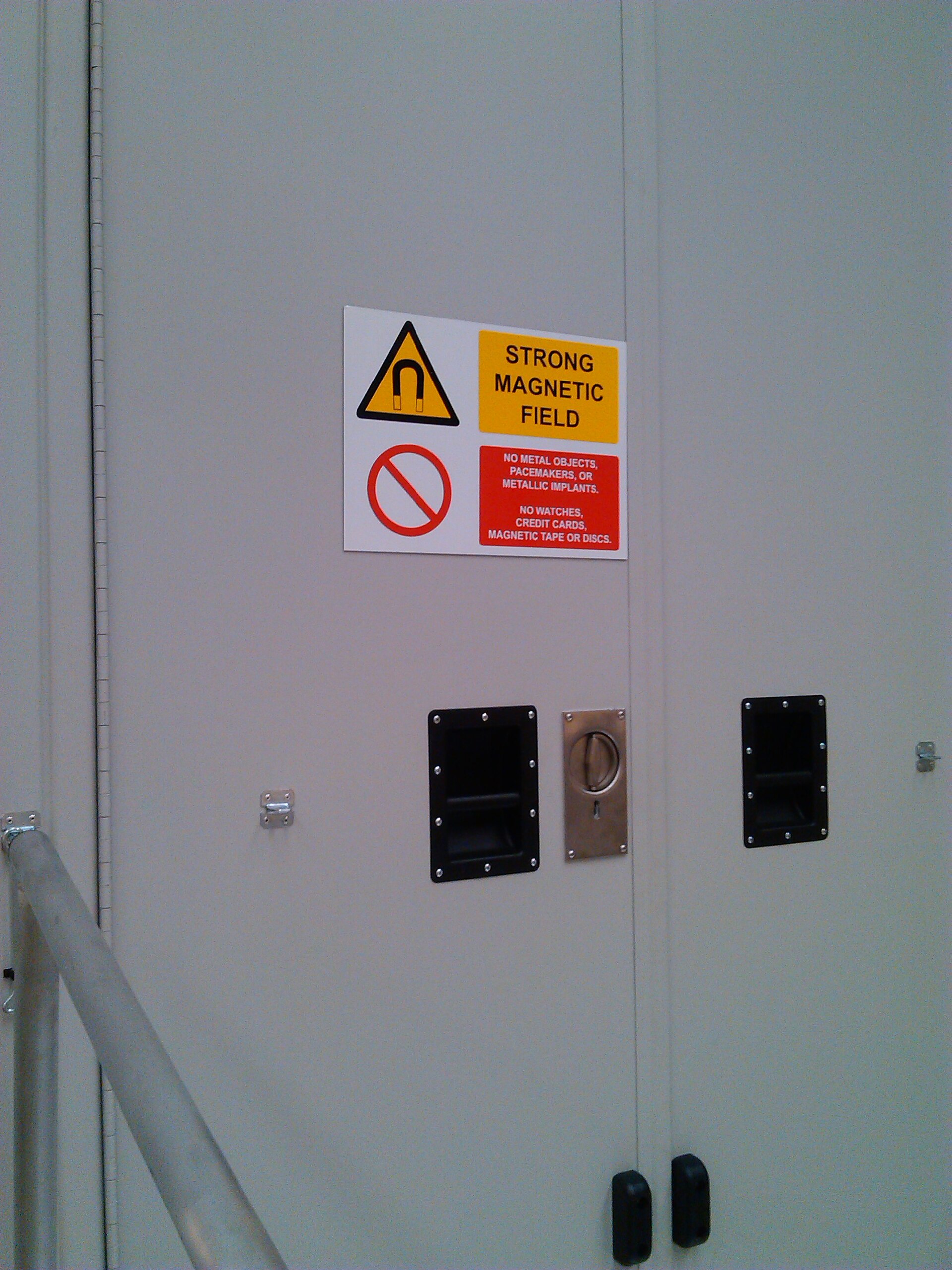
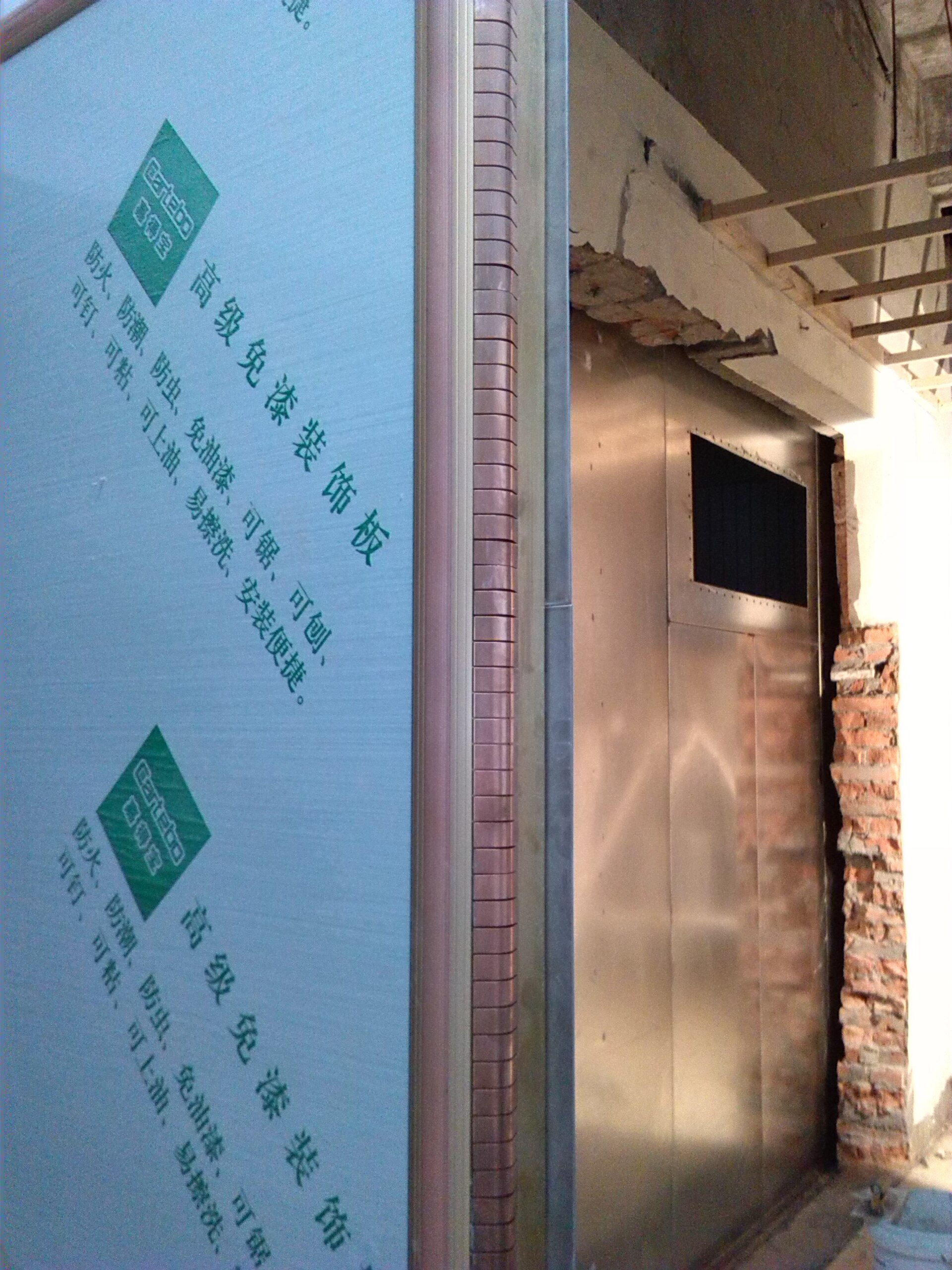
Images: Wutsje, CC BY-SA 4.0; Tim Sheerman-Chase, CC BY 2.0; via Wikimedia Commons.
The four zones
| Zone | Who can enter | Typical areas |
|---|---|---|
| Zone I | Anyone | Main entrance, public areas, outside the MR environment |
| Zone II | Patients and staff, under supervision | Reception, patient interview and screening areas |
| Zone III | Only screened, trained MR personnel; others only with supervision | Control room, area immediately outside the scanner room; access must be physically controlled |
| Zone IV | Only screened people, under direct supervision of trained MR personnel | The scanner room itself, where the magnet is |
Zone III is the critical boundary. It is where unscreened people and equipment are stopped, so it needs a physical barrier such as a locked or controlled door, and a clear process that nobody crosses without screening.
Main hazards
Projectile effect
Ferromagnetic objects are attracted to the magnet and can be pulled in with great speed and force. Oxygen cylinders, wheelchairs, trolleys, tools and cleaning equipment have all been involved in incidents. Only equipment tested and labelled for the MR environment should enter Zone IV.
RF heating and burns
The RF field deposits energy in the body. Conductive loops, such as cables, skin-to-skin contact points or some clothing and jewellery, can concentrate heating and cause burns. Padding, correct cable routing and removing unnecessary items are standard precautions.
Acoustic noise
Rapidly switching gradients produce loud noise. Hearing protection is provided to patients and anyone in the room during scanning.
Implants and devices
Pacemakers, neurostimulators, cochlear implants, aneurysm clips and many other devices may be affected. Whether a person can be scanned depends on the specific device, its documentation, the field strength and the scan conditions. Screening and device checking must follow local procedures and involve the MR safety expert.
Labelling: Safe, Conditional, Unsafe
| Label | Meaning |
|---|---|
| MR Safe | Poses no known hazard in any MR environment (typically non-conducting, non-metallic, non-magnetic items) |
| MR Conditional | Safe in a defined MR environment under specified conditions, for example field strength, gradient limits or RF energy limits |
| MR Unsafe | Known hazard in all MR environments |
These terms come from the ASTM F2503 standard. “MR Conditional” always depends on the conditions written in the device documentation.
The quench button
In a life-threatening emergency, such as a person pinned by a ferromagnetic object, the magnet field can be removed by a quench, which rapidly boils off the cryogen and ramps the field down. It is a last resort because it is costly and carries its own hazards, so staff should be trained in when to use it and in the department emergency procedure.
Key takeaways
- The magnet is always on, so control of access matters more than anything else.
- Zone III is the control point between unscreened and screened.
- Screen patients, staff and visitors every time, and treat every item as unsafe until it is shown to be otherwise.
- Device decisions rely on the manufacturer’s documentation and the MR safety expert.
Frequently asked questions
Is a person with a metal implant automatically excluded?
No. Many implants are MR Conditional. The decision depends on the specific device and local procedures.
Who is the MR safety expert?
A person designated by the institution with advanced knowledge of MR safety, who advises on policy and difficult cases.
References and further reading
- Expert Panel on MR Safety. ACR Manual on MR Safety (current edition). American College of Radiology.
- Medicines and Healthcare products Regulatory Agency (MHRA). Safety guidelines for magnetic resonance imaging equipment in clinical use (current edition).
- ASTM F2503. Standard practice for marking medical devices and other items for safety in the magnetic resonance environment.
Related articles
Last reviewed: 4 November 2026. Educational content only. It does not replace your institution’s MRI safety policy, the manufacturer’s instructions, or the judgement of your MR safety expert and responsible clinician.