MRI in pregnancy: safety, gadolinium, breastfeeding and pregnant staff

Learning objectives
- Summarise the evidence on MRI safety during pregnancy
- Know when gadolinium should and should not be given
- Advise on breastfeeding after gadolinium
- Know the usual guidance for pregnant MRI staff
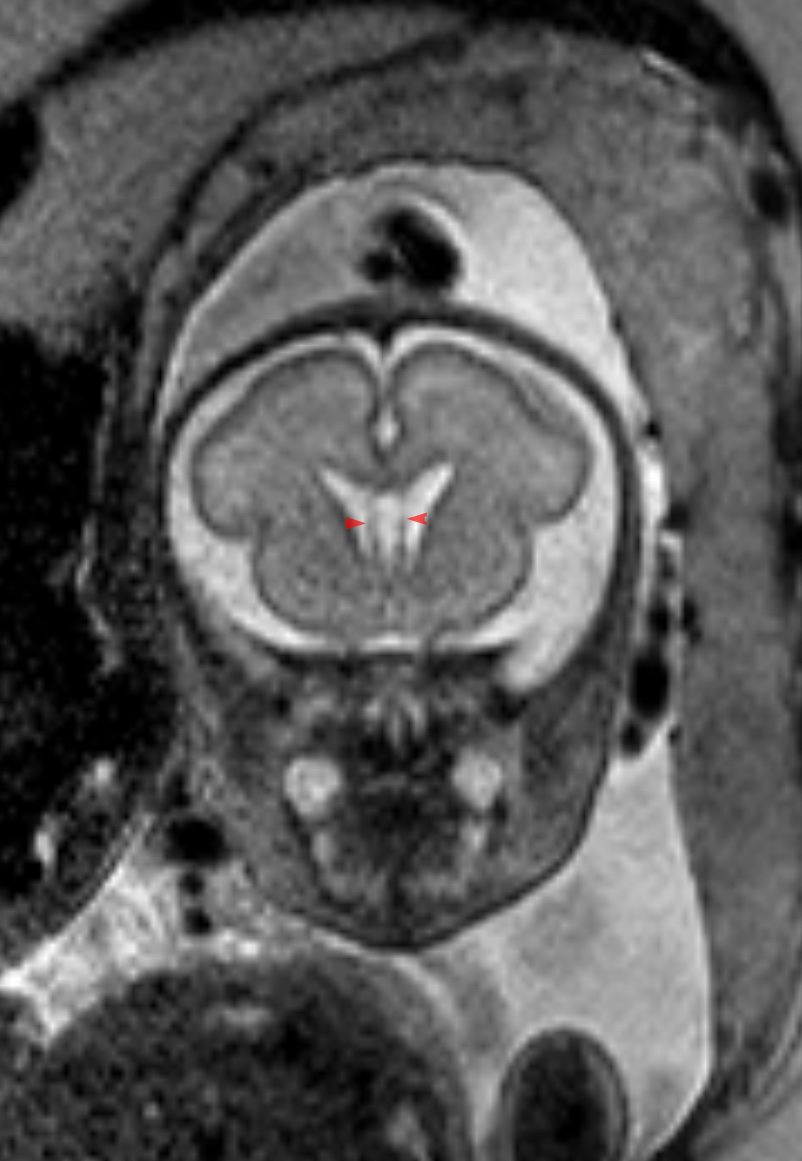
Is MRI safe in pregnancy?
MRI uses no ionising radiation, and there is no evidence that MRI without contrast harms the fetus. A large Canadian population study (Ray et al., JAMA 2016) found no increased risk of stillbirth, neonatal death, congenital anomalies, cancer, or hearing or vision loss in children exposed to MRI in the first trimester. Guidance from the American College of Radiology (ACR) and others states that MRI can be performed at any stage of pregnancy when the information is needed and cannot be obtained safely by ultrasound.
Practical measures
- Confirm the clinical need and record it, as for any examination.
- Many departments prefer 1.5 T, and keep to normal operating mode for SAR.
- Position on the left side, or with a wedge under the right hip, in later pregnancy to avoid pressure on the inferior vena cava.
- Offer hearing protection to the mother as usual.
- Fetal MRI uses fast single-shot sequences that freeze fetal movement.
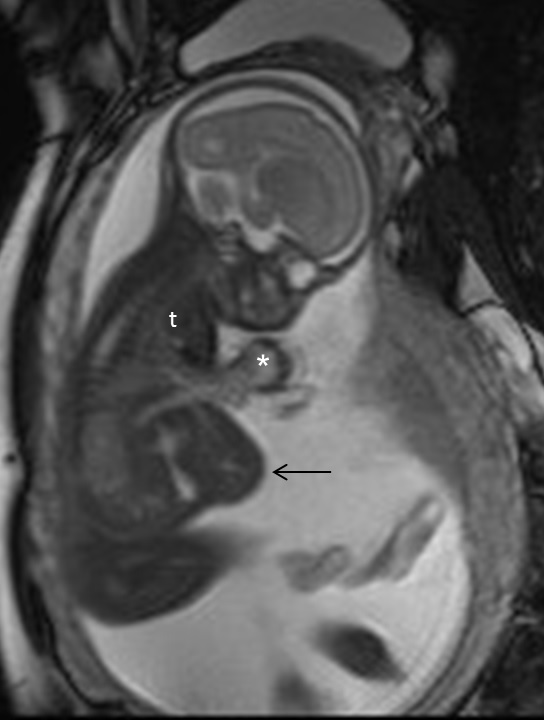
Gadolinium
Gadolinium contrast agents cross the placenta and enter the amniotic fluid. In the same JAMA study, gadolinium at any time in pregnancy was associated with a higher rate of rheumatological, inflammatory or infiltrative skin conditions and of stillbirth or neonatal death, although the absolute numbers were small. Current advice is to avoid gadolinium in pregnancy unless it is essential and the benefit clearly outweighs the possible risk, with the decision documented. See Gadolinium contrast agents explained.
Breastfeeding
Less than 0.04% of an intravenous gadolinium dose passes into breast milk, and less than 1% of that is absorbed from the baby’s gut. The ACR states that it is not necessary to stop breastfeeding after gadolinium. A mother who prefers can express and discard milk for 12–24 hours.
Pregnant staff
Pregnant staff can usually continue to work in MRI. ACR guidance advises that they do not stay inside the magnet room while scanning is in progress. Local policies vary, so staff should discuss their duties with their manager and the MR safety team.
Key points
- Non-contrast MRI can be used at any stage of pregnancy when clinically needed.
- Avoid gadolinium unless essential.
- Breastfeeding does not need to stop after gadolinium.
References
- Ray JG, Vermeulen MJ, Bharatha A, Montanera WJ, Park AL. Association between MRI exposure during pregnancy and fetal and childhood outcomes. JAMA 2016;316(9):952–961.
- Kanal E, Barkovich AJ, Bell C, et al. ACR guidance document on MR safe practices: 2013. J Magn Reson Imaging 2013;37(3):501–530.
- ACR Committee on Drugs and Contrast Media. ACR Manual on Contrast Media. American College of Radiology, 2024.
Related articles
- Gadolinium contrast agents explained
- RF heating, SAR, nerve stimulation and noise
- MRI safety zones explained
Last reviewed: 7 November 2026. Educational content only. Every site must follow its own MR safety policy, the device manufacturer’s MR Conditional instructions and national guidance, under the direction of its MR safety expert and responsible staff.